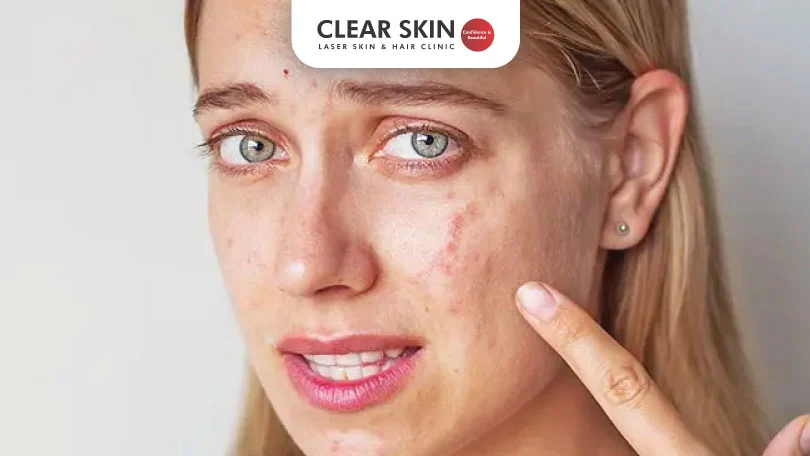
Understanding Acne Scars: The Basics
Acne scars are a common concern for many individuals who have experienced severe acne. These scars form when the skin tries to heal itself after a breakout. The good news is that various treatment options are available to help reduce their appearance and improve skin texture.
Types of Acne Scars
Before diving into treatment options, it's crucial to identify the type of acne scars you have, as this can influence the treatment approach.
Atrophic Scars: These are the most common and include:
- Ice Pick Scars: Deep, narrow scars that penetrate the skin.
- Boxcar Scars: Broad, rectangular depressions with sharp edges.
- Rolling Scars: Undulating appearance, making the skin look uneven.
Hypertrophic Scars: Raised scars that remain within the boundaries of the original wound.
Keloid Scars: Similar to hypertrophic scars but grow beyond the original wound site.
Treatment Options: What Works?
Topical Treatments
For minor scarring, topical treatments can be a good starting point. Ingredients such as retinoids, alpha hydroxy acids (AHAs), and beta hydroxy acids (BHAs) are scientifically known to help improve skin texture by promoting cell turnover and collagen production.
Retinoids: These vitamin A derivatives are proven to help reduce acne scars by speeding up cell turnover and stimulating collagen production. Retinoids are available both over-the-counter and by prescription.
AHAs/BHAs: AHAs, like glycolic acid, and BHAs, such as salicylic acid, can help exfoliate the skin and fade discoloration associated with acne scars.
Chemical Peels
Chemical peels involve applying a solution to the skin that causes it to exfoliate and eventually peel off. This treatment is effective for atrophic scars and can improve skin texture and tone. A study published in the Journal of Clinical and Aesthetic Dermatology in 2018 highlights their effectiveness for mild to moderate acne scars.
Microneedling
Microneedling uses small needles to create controlled micro-injuries in the skin, stimulating collagen production and improving scar appearance. Research in the Journal of Cutaneous and Aesthetic Surgery suggests that microneedling can significantly improve atrophic scars.
Laser Therapy
Laser treatments, such as fractional laser resurfacing, target the deeper layers of the skin to encourage collagen growth and improve skin texture. According to the American Academy of Dermatology, lasers like CO2 or Erbium can be effective for various types of scars, including ice pick and boxcar scars.
Dermal Fillers
For deeper scars, dermal fillers can be injected to raise the depressed areas of the skin. Fillers such as hyaluronic acid are commonly used and can provide immediate results. However, they are a temporary solution and may require repeat treatments.
Surgical Options
For severe scarring, surgical options like punch excision or subcision can be effective. These procedures are usually performed by a dermatologist and involve surgically removing or releasing scar tissue.
Practical Tips for Managing Acne Scars
Consult a Dermatologist: Always consult a dermatologist to determine the best treatment plan for your specific type of acne scars.
Sun Protection: Protecting your skin from the sun is crucial as UV exposure can darken scars and make them more noticeable.
Patience is Key: Most treatments require multiple sessions and take time to show full results.
Follow Post-Treatment Care: Adhere to any post-treatment care instructions provided by your dermatologist to ensure optimal results.
Conclusion
Acne scars can be a challenging skin issue, but with the right treatment, it's possible to achieve smoother, more even skin. Whether opting for topical treatments or more advanced options like laser therapy, consulting with a dermatologist will help tailor a plan that suits your skin's needs.
Acne scars don't have to be a permanent feature of your skin. The right treatment can make a significant difference, enhancing not only your skin's appearance but also your confidence.