Tea Tree Oil for Acne: A Natural Solution Backed by Science
Acne is a frustrating skin condition that affects millions worldwide, prompting many to seek natural remedies for relief. Among the most popular options is tea tree oil, a potent essential oil derived from the leaves of the tea tree (Melaleuca alternifolia), native to Australia. But does tea tree oil actually work for acne? Let's dive into the scientific evidence, benefits, usage tips, and precautions so you can make an informed decision.
How Tea Tree Oil Works Against Acne
Tea tree oil contains powerful antimicrobial and anti-inflammatory properties, making it a promising option for acne treatment. The primary active compound in tea tree oil is terpinen-4-ol, which is known to exhibit antibacterial activity against acne-causing bacteria like Propionibacterium acnes (now reclassified as Cutibacterium acnes).
Scientific Studies Supporting Tea Tree Oil
- A 2007 study published in the Indian Journal of Dermatology, Venereology and Leprology showed that a 5% tea tree oil gel significantly reduced acne lesions over 45 days, compared to a placebo.
- Another study from 1990 compared tea tree oil to benzoyl peroxide (a common acne treatment) and found that while both were effective, tea tree oil caused fewer side effects like dryness and irritation.
These studies suggest that tea tree oil can be a gentler, yet effective option for combating mild to moderate acne.
Benefits of Using Tea Tree Oil for Acne
Tea tree oil offers several advantages for acne sufferers:
- Fights Acne-Causing Bacteria: Its antibacterial properties help reduce the proliferation of acne-causing C. acnes bacteria.
- Soothes Inflammation: Tea tree oil’s anti-inflammatory effects can calm redness, swelling, and irritation around acne lesions.
- Reduces Oiliness: By balancing sebum production, tea tree oil can help prevent clogged pores.
- Minimizes Scarring: Its wound-healing properties may contribute to reduced acne scars over time.
- Natural Alternative: For those looking to avoid harsh chemicals, tea tree oil provides a plant-based solution.
How to Use Tea Tree Oil Safely
While tea tree oil is effective, improper use can cause irritation or allergic reactions. Follow these steps to use it safely:
1. Dilute Before Applying
Tea tree oil is highly concentrated and should never be applied directly to the skin. Mix it with a carrier oil (e.g., coconut oil, jojoba oil) or water. A safe ratio is 1-2 drops of tea tree oil per teaspoon of carrier oil.
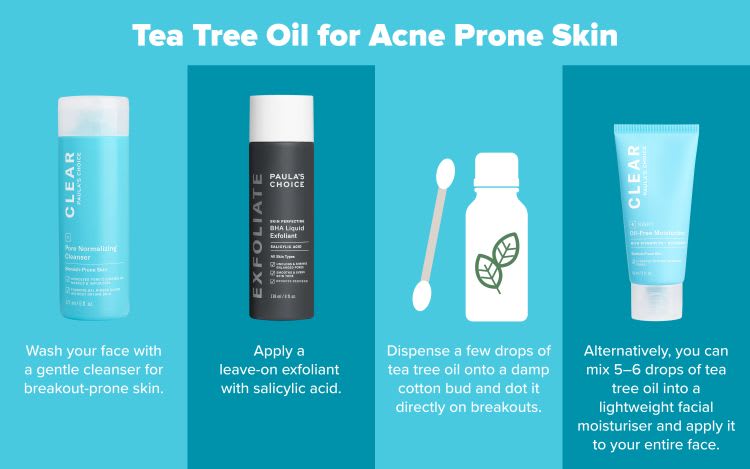
2. Spot Treatment
Use a cotton swab to apply the diluted tea tree oil directly to acne spots. Avoid using it on large areas of the face as it may dry out your skin.
3. Patch Test First
Before applying tea tree oil to your face, conduct a patch test by applying a small amount to your inner forearm. Wait 24 hours to check for any adverse reactions such as redness or itching.
4. Incorporate Into Your Routine
You can mix a few drops of tea tree oil with your favorite skincare products, such as moisturizers or face masks, to enhance their acne-fighting abilities.
5. Don’t Overuse
Using tea tree oil more than twice a day can cause excessive dryness and irritation, so moderation is key.
Precautions to Keep in Mind
Despite its many benefits, tea tree oil may not be suitable for everyone. Here are some precautions:
- Allergic Reactions: Some people may be allergic to tea tree oil. If you notice itching, burning, or redness after use, discontinue immediately.
- Avoid Eye Area: Tea tree oil is highly potent and can irritate sensitive areas like the eyes. Be careful when applying it near your face.
- Pregnancy and Children: Consult a dermatologist before using tea tree oil if you’re pregnant or planning to use it on children.
- Storage: Keep tea tree oil in a cool, dark place to preserve its potency.
Is Tea Tree Oil Right for You?
Tea tree oil can be a game-changer for those dealing with mild to moderate acne, but it’s not a one-size-fits-all solution. If you have severe acne or underlying skin conditions, consult a dermatologist to develop a tailored treatment plan. Remember, consistency is key—tea tree oil may take a few weeks to show visible results.
Final Thoughts
Tea tree oil is a scientifically-backed natural remedy that offers antibacterial, anti-inflammatory, and soothing benefits for acne-prone skin. By following proper usage guidelines and precautions, you can safely incorporate this powerhouse essential oil into your skincare routine. However, always listen to your skin—if irritation occurs, discontinue use and explore alternative treatments.
Have you tried tea tree oil for acne? Share your experience or questions in the comments below!
FAQs About Tea Tree Oil and Acne
Q: Can tea tree oil be used on cystic acne?
A: While tea tree oil can help reduce inflammation, it may not be effective for deep, cystic acne. Consult a dermatologist for severe cases.
Q: How long does it take for tea tree oil to work on acne?
A: Results vary, but many people notice improvement in mild acne within 4-6 weeks of consistent use.
Q: Can I use tea tree oil every day?
A: Yes, but limit usage to once or twice a day to avoid excessive dryness or irritation.
Q: Is tea tree oil better than benzoyl peroxide?
A: Tea tree oil is gentler on the skin with fewer side effects, but benzoyl peroxide may work faster for some people. The choice depends on your skin's sensitivity and needs.
Resources:
- Indian Journal of Dermatology, Venereology and Leprology: https://ijdvl.com
- National Center for Biotechnology Information: https://www.ncbi.nlm.nih.gov
- American Academy of Dermatology: https://www.aad.org