Tea Tree Oil for Acne: Benefits, Usage, and Tips for Clear Skin
Acne can be a frustrating and confidence-denting skin concern. If you've been searching for natural remedies, you may have come across tea tree oil—a popular essential oil praised for its acne-fighting properties. In this blog, we’ll dive into the science behind tea tree oil, how it works, and practical tips for using it safely and effectively.
What Is Tea Tree Oil?
Tea tree oil is an essential oil extracted from the leaves of the Melaleuca alternifolia tree, native to Australia. It has been used for centuries for its medicinal properties, particularly due to its ability to fight bacteria, fungi, and inflammation.
How Tea Tree Oil Works for Acne
The effectiveness of tea tree oil against acne lies in its powerful antibacterial and anti-inflammatory properties:
Antibacterial Action: Acne is often triggered by the bacteria Propionibacterium acnes (now known as Cutibacterium acnes). Tea tree oil contains terpinen-4-ol, a compound that can kill these acne-causing bacteria, reducing the risk of breakouts.
Anti-Inflammatory Benefits: Acne lesions, especially inflamed pimples, can be painful and red due to swelling. Tea tree oil helps calm inflammation, making pimples look less prominent and reducing discomfort.
Oil Control: Tea tree oil may also help regulate sebum production, which is crucial for preventing clogged pores—a common culprit of acne.
Scientific Backing for Tea Tree Oil and Acne
Several studies have demonstrated tea tree oil’s effectiveness against acne:
A 2017 review published in the "Australasian Journal of Dermatology" found that products containing tea tree oil significantly reduced acne lesions in participants compared to placebo groups.
A clinical trial published in the "Journal of Dermatology" observed that a 5% tea tree oil gel was effective in treating mild to moderate acne, showing comparable results to benzoyl peroxide but with fewer irritating side effects.
These studies highlight tea tree oil as a promising alternative to synthetic acne treatments, especially for individuals seeking gentler options.
How to Use Tea Tree Oil for Acne
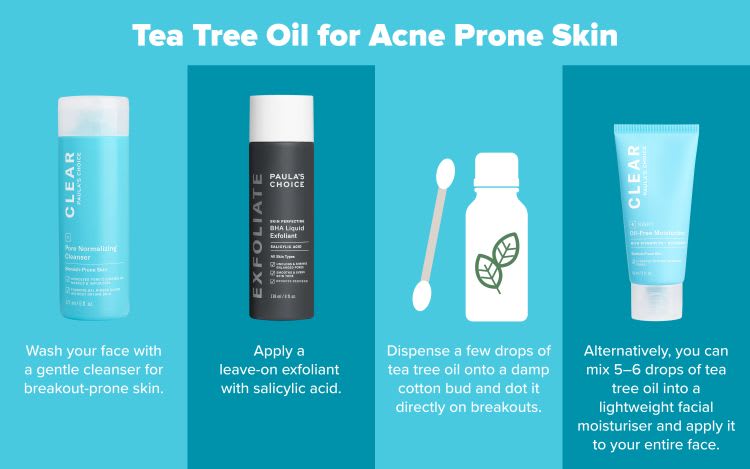
Tea tree oil is potent and should never be applied undiluted to your skin, as it may cause irritation or dryness. Follow these steps for safe usage:
1. Dilute Properly
Mix tea tree oil with a carrier oil, such as jojoba oil or coconut oil, to reduce its potency. The recommended ratio is 1–2 drops of tea tree oil per teaspoon of carrier oil.
2. Spot Treatment
Use a cotton swab to apply the diluted mixture directly to acne spots. Avoid spreading it over large areas, as concentrated application is more effective for treating individual blemishes.
3. Patch Test First
Before applying tea tree oil to your face, perform a patch test on your inner wrist or behind your ear to check for any allergic reactions or sensitivity.
4. Incorporate Into Skincare Products
Look for skincare products that already contain tea tree oil, such as cleansers, toners, or gels. These are often formulated to provide safe concentrations of the oil.
5. Use Sparingly
Due to its potency, use tea tree oil sparingly—typically once or twice a day. Overusing it can lead to dryness, irritation, or even worsen acne.
Potential Side Effects and Precautions
While tea tree oil is generally safe for most people, it’s important to be aware of potential side effects:
- Skin Sensitivity: Undiluted tea tree oil can cause redness, dryness, or irritation. Always dilute and test it before use.
- Allergic Reactions: Some individuals may have an allergy to tea tree oil. If you experience itching, swelling, or rash, stop using it immediately.
- Photosensitivity: Tea tree oil can make your skin more sensitive to sunlight. Apply sunscreen during the day to avoid UV damage.
- Avoid Ingestion: Tea tree oil is toxic if ingested. Keep it away from your mouth and ensure it’s stored safely.
Who Should Use Tea Tree Oil for Acne?
Tea tree oil is ideal for:
- Individuals with mild to moderate acne.
- Those seeking a natural alternative to over-the-counter treatments like benzoyl peroxide.
- People with oily or combination skin types.
However, if you have severe or cystic acne, consider consulting a dermatologist for professional treatments rather than relying solely on tea tree oil.
Alternatives to Tea Tree Oil
If tea tree oil doesn’t work for you, consider other natural and science-backed options for acne treatment:
- Salicylic Acid: A beta-hydroxy acid that exfoliates and unclogs pores.
- Niacinamide: A form of vitamin B3 that reduces inflammation and controls oil production.
- Benzoyl Peroxide: An effective antibacterial agent, though it may be more irritating than tea tree oil.
Conclusion
Tea tree oil is a powerful natural remedy for acne, thanks to its antibacterial and anti-inflammatory properties. When used correctly, it can help reduce breakouts, calm redness, and improve overall skin health. However, its potency means you should always dilute it and perform a patch test before use.
For mild to moderate acne, tea tree oil can be a fantastic addition to your skincare routine. If your acne persists or worsens, consult a dermatologist to explore other effective options. Remember, consistency and patience are key to achieving clear, healthy skin.
Key Takeaways
- Tea tree oil contains antibacterial and anti-inflammatory compounds that target acne.
- Always dilute tea tree oil and test it before use to avoid irritation.
- Consider incorporating tea tree oil into existing skincare products for added benefits.
- Severe or persistent acne may require professional intervention.
Clear skin is achievable—start with small, informed steps, and your skin will thank you!