Tea Tree Oil for Acne: A Natural Remedy Worth Trying
When it comes to tackling acne, tea tree oil has gained significant popularity as a natural solution. Derived from the leaves of the Australian native plant Melaleuca alternifolia, this essential oil is widely celebrated for its antibacterial and anti-inflammatory properties. But does tea tree oil really work for acne, and how can you use it safely? Let’s dive deep into the evidence and practical tips to make the most of this powerful ingredient.
The Science Behind Tea Tree Oil and Acne
Tea tree oil contains compounds like terpinen-4-ol, which are known to kill bacteria and reduce inflammation. Acne is often caused by a combination of clogged pores, excess oil production, bacteria (Propionibacterium acnes, or Cutibacterium acnes), and inflammation. Tea tree oil targets these contributing factors, making it a promising option for acne-prone skin.
What the Research Says
Scientific studies back up tea tree oil’s effectiveness for mild to moderate acne:
A 1990 study published in the Medical Journal of Australia compared tea tree oil gel (5% concentration) with benzoyl peroxide (a common acne treatment). Both were effective in reducing acne lesions, but tea tree oil caused fewer side effects like dryness and irritation.
A 2017 review in the International Journal of Dermatology highlighted tea tree oil’s ability to reduce acne severity due to its antimicrobial and anti-inflammatory properties.
While promising, tea tree oil is not a magic cure, and its effects can vary depending on the individual. Consistency and proper application are key.
Benefits of Tea Tree Oil for Acne
Using tea tree oil for acne offers several benefits:
1. Natural Antibacterial Power
Tea tree oil helps kill acne-causing bacteria, preventing further breakouts and promoting clearer skin. Its natural properties make it an alternative to harsher chemical treatments.
2. Anti-Inflammatory Effects
Tea tree oil reduces redness and swelling associated with inflamed pimples, helping skin look calmer and healthier.
3. Lower Risk of Irritation (When Diluted Properly)
Compared to certain commercial acne treatments, tea tree oil may have fewer side effects if used correctly.
How to Use Tea Tree Oil for Acne Safely
Tea tree oil is a potent essential oil. While effective, using it carelessly can lead to skin irritation or other adverse effects. Follow these tips to incorporate tea tree oil into your skincare routine safely:
1. Dilute It First
Never apply undiluted tea tree oil directly to your skin. Essential oils are highly concentrated and can cause irritation. Mix a few drops of tea tree oil with a carrier oil like jojoba, coconut, or almond oil before applying.
2. Patch Test Before Full Use
Before applying tea tree oil to your face, test it on a small area of skin, such as your inner arm. Wait 24 hours to ensure you don’t have an allergic reaction.
3. Spot Treatment Method
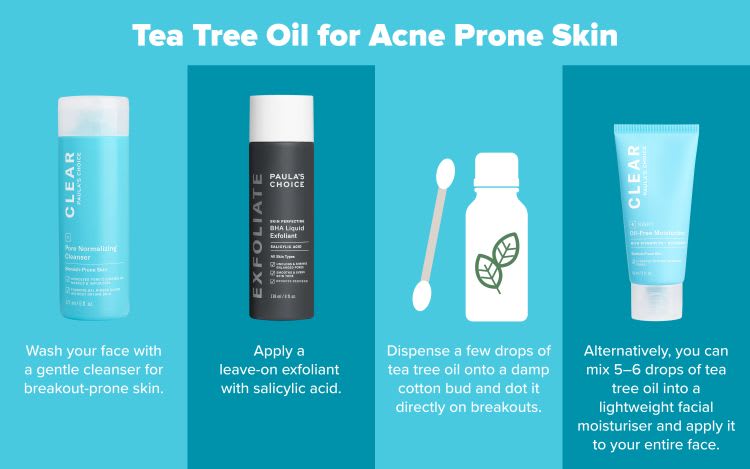
Apply diluted tea tree oil directly to individual pimples using a cotton swab. Avoid spreading it across large areas of your face unless you’re sure your skin can tolerate it.
4. Use in Skincare Products
Many cleansers, toners, and gels contain tea tree oil in safe concentrations. Choose products labeled for acne-prone skin and follow the manufacturer’s instructions.
5. Avoid Overuse
Using tea tree oil too frequently can dry out your skin, leading to increased oil production and potentially more acne. Start with once-a-day application and adjust as needed.
Potential Side Effects and Precautions
While tea tree oil is generally safe, it’s important to be aware of potential side effects:
- Skin Irritation: Undiluted tea tree oil can cause redness, burning, or itching.
- Allergic Reactions: Some people may develop contact dermatitis. Always patch test first.
- Photosensitivity: Tea tree oil may increase your skin’s sensitivity to sunlight. Use sunscreen when applying it during the day.
If you experience any adverse reactions, discontinue use immediately and consult a dermatologist.
DIY Tea Tree Oil Acne Spot Treatment Recipe
Here’s a simple recipe for making your own tea tree oil spot treatment:
Ingredients:
- 2-3 drops of tea tree oil
- 1 teaspoon of carrier oil (e.g., jojoba oil or coconut oil)
Instructions:
- Mix the tea tree oil with the carrier oil thoroughly.
- Dip a clean cotton swab into the mixture and dab it onto individual pimples.
- Allow it to absorb into the skin. Do not rinse off.
When to See a Dermatologist
Tea tree oil can be a helpful addition to your acne-fighting arsenal, but it’s not a replacement for professional medical advice. If your acne is severe, persistent, or causing emotional distress, consult a dermatologist. They can recommend treatments like prescription medications or advanced therapies tailored to your needs.
Final Thoughts
Tea tree oil is a natural, affordable, and scientifically-backed option for mild to moderate acne. With proper dilution, consistent use, and caution, it can help reduce breakouts and inflammation effectively. Remember, healthy skin doesn’t come from a single ingredient—it’s a combination of good skincare habits, a balanced diet, and, when necessary, guidance from a skincare professional.
So, why not give tea tree oil a try? Your path to clearer skin might just be a few drops away!
Key Takeaways
- Tea tree oil has antibacterial and anti-inflammatory benefits that can help treat acne.
- Always dilute tea tree oil before applying it to your skin.
- Patch test first to avoid allergic reactions or irritation.
- Use tea tree oil sparingly and consult a dermatologist for severe acne.
Disclaimer: This article is for informational purposes only and does not substitute professional medical advice. Always consult a dermatologist before trying new skincare products.