Tea Tree Oil for Acne: A Natural Solution Backed by Science
Tea tree oil has gained popularity as a natural remedy for acne, and for good reason. Known for its antibacterial and anti-inflammatory properties, tea tree oil offers an effective, affordable, and accessible option for those battling breakouts. In this article, we'll dive into the science behind tea tree oil, its benefits for acne-prone skin, and practical advice for safe and effective use.
What is Tea Tree Oil?
Tea tree oil comes from the leaves of the Melaleuca alternifolia plant, native to Australia. It's been used for centuries in traditional medicine to treat various skin concerns due to its potent antimicrobial and healing properties. Today, tea tree oil is widely available as an essential oil and included in many skincare products designed for acne treatment.
How Does Tea Tree Oil Help with Acne?
Acne occurs when pores become clogged with excess oil, dead skin cells, and bacteria. Tea tree oil targets acne in several ways:
Antibacterial Properties: Studies show that tea tree oil contains terpenes, particularly terpinen-4-ol, which can kill acne-causing bacteria like Propionibacterium acnes. A 2007 study published in the Indian Journal of Dermatology, Venereology, and Leprology found that a 5% tea tree oil gel significantly reduced acne lesions compared to a placebo.
Anti-inflammatory Effects: Acne often comes with redness and swelling. The anti-inflammatory properties of tea tree oil can help calm irritated skin and reduce redness, making blemishes less noticeable.
Oil Regulation: Tea tree oil can help balance oil production, improving the appearance of oily skin over time. Keeping skin's oil levels in check is key to preventing future breakouts.
How to Use Tea Tree Oil for Acne
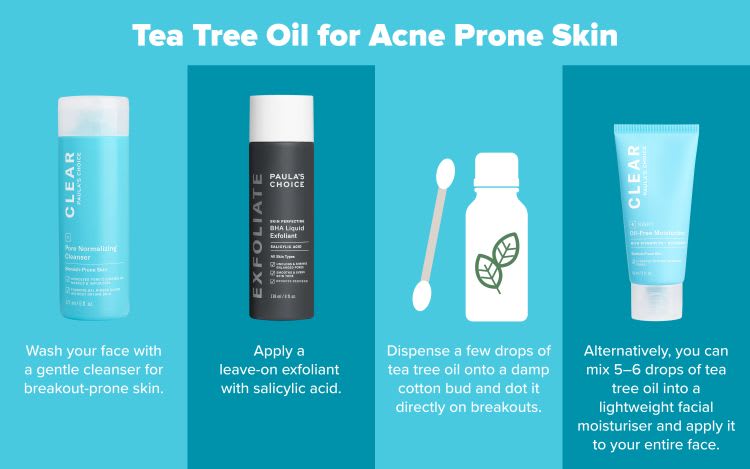
When using tea tree oil, proper application is crucial to avoid irritation or adverse reactions. Here are simple, actionable tips to incorporate tea tree oil into your skincare routine:
1. Dilute It
Tea tree oil is highly concentrated and can be harsh if used undiluted. Always dilute it with a carrier oil such as jojoba oil, coconut oil, or almond oil. A safe ratio is 1-2 drops of tea tree oil per teaspoon of carrier oil.
2. Spot Treat Acne
Dip a clean cotton swab into the diluted tea tree oil mixture and apply it directly to active acne spots. Avoid applying it all over your face unless it’s already diluted into a cream or cleanser.
3. Do a Patch Test
Before using tea tree oil for the first time, perform a patch test. Apply a small amount to your inner arm and wait 24 hours to ensure you're not allergic or sensitive to it. If redness, itching, or irritation occurs, avoid further use.
4. Use Tea Tree Oil-Based Products
If DIY isn’t your thing, look for skincare products formulated with tea tree oil. These can include cleansers, serums, gels, or moisturizers with safe concentrations of tea tree oil.
5. Limit Frequency
Start by using tea tree oil once daily to prevent over-drying your skin. Gradually increase usage to twice daily if your skin tolerates it well.
Precautions When Using Tea Tree Oil
While tea tree oil can be a game-changer for acne, it’s important to use it responsibly:
- Avoid Eye Area: Tea tree oil should never come into contact with your eyes, as it can cause severe irritation.
- Don’t Ingest: Tea tree oil is meant for topical use only and should not be consumed.
- Watch for Sensitivity: If you have sensitive skin, tea tree oil may cause redness or dryness. Always dilute it and discontinue use if irritation occurs.
- Sun Sensitivity: Tea tree oil may make your skin more sensitive to UV rays. Be sure to wear sunscreen during the day.
Does Tea Tree Oil Work for Everyone?
Tea tree oil is effective for many people, but its benefits can vary depending on your skin type and severity of acne. Mild to moderate acne tends to respond well, while severe cystic acne may require medical treatments like prescription medications or hormonal therapies. If tea tree oil doesn’t work for you, consult a dermatologist for alternative options.
Tea Tree Oil vs. Other Acne Treatments
Tea tree oil offers a natural alternative to chemical treatments like benzoyl peroxide or salicylic acid. While benzoyl peroxide is fast-acting, it often causes dryness and peeling, which tea tree oil may help minimize due to its gentler nature. However, tea tree oil typically requires consistent use over several weeks to see noticeable results.
Key Takeaways
Tea tree oil is a fantastic natural acne remedy with scientific backing to support its effectiveness. By incorporating it into your skincare routine—diluted properly and applied responsibly—you can harness its antibacterial and anti-inflammatory benefits for clearer skin. While it isn’t a one-size-fits-all solution, it’s worth trying if you’re searching for a gentle, plant-based option. Like all skincare products, consistency and patience are key to achieving results.
Final Thoughts
Acne can be frustrating, but the right treatment can make all the difference. Tea tree oil is a powerful, natural tool that offers relief while being kind to your skin. Whether you use it as a spot treatment or opt for products containing it, tea tree oil has the potential to improve your skin's health over time. Remember: every skin journey is unique, so don’t hesitate to seek professional advice if needed.
If you've tried tea tree oil for acne, share your experience in the comments below! Your story could inspire someone else on their skincare journey.