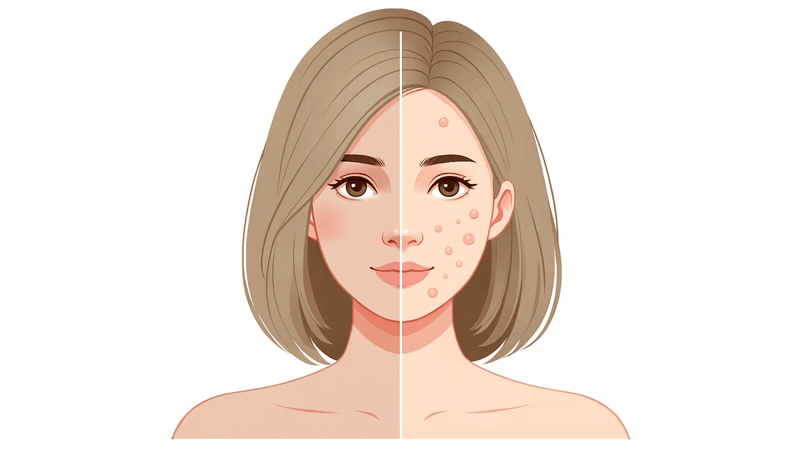
Understanding the Dairy-Acne Link
For many acne sufferers, the quest for clear skin can feel like navigating a complex maze. One potential cul-de-sac in this labyrinth is dairy. Could your morning latte or that post-workout whey shake be contributing to your breakouts? Let's delve into the science to unravel this conundrum.
The Science Behind Dairy and Acne
Hormonal Connections
Dairy products, especially those derived from cow's milk, contain hormones that might influence acne development. Milk naturally contains anabolic steroids and other hormones, such as IGF-1 (Insulin-like Growth Factor 1), which can affect your body's own hormonal balance. Elevated IGF-1 levels are linked to increased sebum production and the proliferation of skin cells, both of which can clog pores and lead to acne.
Glycemic Load Concerns
Dairy's impact isn't just hormonal. Some dairy products, like flavored yogurts and milk, come with added sugars that increase their glycemic load. High glycemic diets can spike blood sugar levels, triggering insulin release. This cascade can lead to inflammation and, subsequently, acne flares.
What the Research Says
The relationship between dairy and acne isn't just anecdotal; it's backed by research. A 2018 meta-analysis published in the Journal of the Academy of Nutrition and Dietetics found a significant association between milk intake and acne in individuals aged 7 to 30 years. Another study in the American Journal of Clinical Dermatology supported these findings, suggesting a stronger link with skim milk than whole milk.
Practical Advice for Acne Sufferers
Evaluate Your Dairy Intake
Start by assessing how much dairy you consume. Are you a regular milk drinker, or do you find cheese and yogurt as staples in your diet? Understanding your intake can help you make informed decisions about dietary changes.
Consider Dairy Alternatives
If you're looking to reduce dairy to see if it helps your acne, there are plenty of alternatives. Almond, oat, soy, and coconut milk offer similar textures and flavors without the same hormonal triggers. Opt for unsweetened versions to avoid added sugars.
Monitor Changes
Eliminating dairy isn’t a guaranteed cure for acne, but it can be a helpful step for some. Try cutting out dairy for at least three months to see if your skin improves. Keep a journal to track any changes in your skin condition, noting flare-ups and any improvements.
Consult a Professional
Before making significant dietary changes, especially if you have underlying health concerns, consulting with a dermatologist or a registered dietitian can provide personalized advice. They can guide you on a balanced approach to manage your acne without compromising nutritional needs.
Conclusion: Is Dairy the Culprit for Everyone?
While dairy may be a trigger for some, it’s not a universal acne villain. Each person’s skin is unique, and what works for one might not work for another. The connection between diet and acne is complex, and dairy is just one piece of the puzzle. By staying informed and being mindful of your body's reactions, you can better navigate your skincare journey.
Ultimately, finding the right balance between dietary habits and skincare measures can empower you to take control of your acne. Remember, you’re not alone on this journey, and there are solutions out there for everyone.