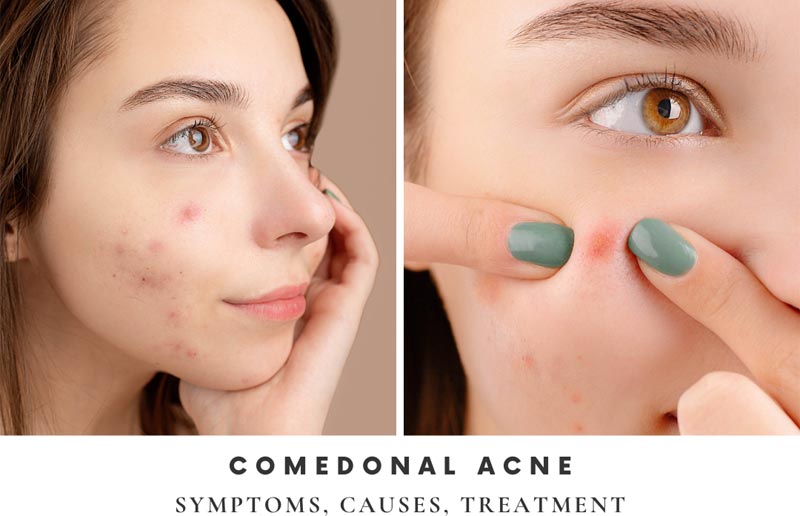
What is Comedonal Acne?
Comedonal acne is a mild form of acne that primarily manifests as small, non-inflammatory bumps on the skin. These bumps, known as comedones, occur when hair follicles become clogged with oil (sebum), dead skin cells, and debris. Unlike inflammatory acne, comedonal acne doesn’t involve redness or swelling, making it less painful but still frustrating for those dealing with it. Common areas affected include the forehead, nose, chin, and sometimes the chest or back.
There are two main types of comedones:
- Open comedones (blackheads): These occur when the clogged pore is exposed to air, causing the sebum to oxidize and turn black.
- Closed comedones (whiteheads): These form when the clogged pore remains closed, trapping the sebum and dead skin inside.
What Causes Comedonal Acne?
Several factors contribute to the development of comedonal acne. While genetics play a significant role, other influences include:
- Excess oil production: Overactive sebaceous glands can lead to clogged pores.
- Hormonal changes: Fluctuations in hormones, especially during puberty, menstruation, or pregnancy, can trigger excess oil production.
- Poor skincare habits: Using heavy or pore-clogging products can exacerbate the condition.
- Diet: High glycemic index foods and dairy have been linked to acne in some individuals.
- Environmental factors: Pollution, humidity, and exposure to certain chemicals can clog pores over time.
How to Identify Comedonal Acne
Comedonal acne is easy to spot due to the presence of blackheads and whiteheads. Unlike inflammatory acne, it doesn’t involve pus-filled pimples or painful cysts. If your skin has small, uniform bumps that don’t cause discomfort, chances are you’re dealing with comedonal acne.
Natural Remedies for Treating Comedonal Acne
While there are many over-the-counter and prescription treatments for comedonal acne, natural remedies can also be effective in managing and preventing flare-ups. Here’s a breakdown of actionable tips backed by science:
1. Cleanse with Gentle, Non-Comedogenic Products
Using a mild cleanser helps remove excess oil and debris without irritating your skin. Look for natural ingredients like aloe vera or chamomile, which soothe the skin. Cleanse your face twice daily to maintain a healthy balance of oils.
2. Exfoliate with Natural Ingredients
Regular exfoliation removes dead skin cells that can clog pores. Opt for gentle exfoliants like:
- Oats: Mix ground oats with water to create a soothing scrub.
- Baking soda: Combine a small amount with water for gentle exfoliation.
- Honey and sugar: This duo offers both exfoliation and antibacterial benefits.
Aim to exfoliate 2-3 times per week, but avoid overdoing it to prevent irritation.
3. Use Tea Tree Oil for Spot Treatment
Tea tree oil has natural antibacterial and anti-inflammatory properties that can help reduce the appearance of blackheads and whiteheads. Dilute a few drops of tea tree oil with a carrier oil (like coconut or jojoba oil) and apply it directly to affected areas.
4. Apply a Clay Mask Weekly
Clay masks, such as bentonite or kaolin clay, are excellent for drawing out impurities and excess oil from pores. Use a natural clay mask once or twice a week to keep comedonal acne at bay.
5. Moisturize with Lightweight Natural Oils
Hydration is key, even for oily skin. Lightweight oils like argan oil or jojoba oil mimic your skin’s natural sebum and can help regulate oil production. Ensure the moisturizer you choose is labeled "non-comedogenic" to avoid worsening clogged pores.
6. Embrace Apple Cider Vinegar Toner
Apple cider vinegar contains acetic acid, which may help balance your skin’s pH and reduce excess oil. Mix one part apple cider vinegar with three parts water and apply it to your skin using a cotton pad. Use this toner once daily for best results.
7. Maintain a Skin-Friendly Diet
Your diet impacts your skin’s health. Focus on anti-inflammatory foods like leafy greens, nuts, and fatty fish while cutting back on processed sugars and dairy. Additionally, drinking plenty of water keeps your skin hydrated from within.
8. Protect Your Skin from Sun Damage
Wearing sunscreen daily prevents UV damage that can exacerbate acne and hyperpigmentation. Look for mineral sunscreens with zinc oxide or titanium dioxide for gentle protection.
Lifestyle Tips to Prevent Comedonal Acne
Prevention is just as important as treatment. Here are some lifestyle changes that can help:
- Stick to a consistent skincare routine: Avoid overloading your skin with products.
- Avoid touching your face: Dirt and bacteria from your hands can clog pores.
- Wash pillowcases regularly: Oils and debris can accumulate and transfer to your skin.
- Manage stress: Stress triggers hormonal changes that can worsen acne. Practice relaxation techniques like meditation or yoga.
When to See a Dermatologist
While natural remedies can be highly effective, it’s essential to consult a dermatologist if your comedonal acne persists or worsens. A professional can recommend medical treatments like topical retinoids or chemical peels, which may be necessary for stubborn cases.
Final Thoughts
Comedonal acne is a manageable skin condition that responds well to natural remedies when cared for properly. By adopting a gentle skincare routine, using natural treatments, and making lifestyle changes, you can keep comedonal acne in check and achieve healthier, clearer skin. Remember, patience is key — natural remedies take time to show results, so stay consistent and kind to your skin.
If you have any tips or experiences with treating comedonal acne, share them in the comments below! Let’s help each other on the journey to better skin.